Last Updated on January 1, 2026 by Kevin Chen
Bio-Cord media is a rope-type biological media that increases attached biomass and improves treatment stability without expanding tank volume.
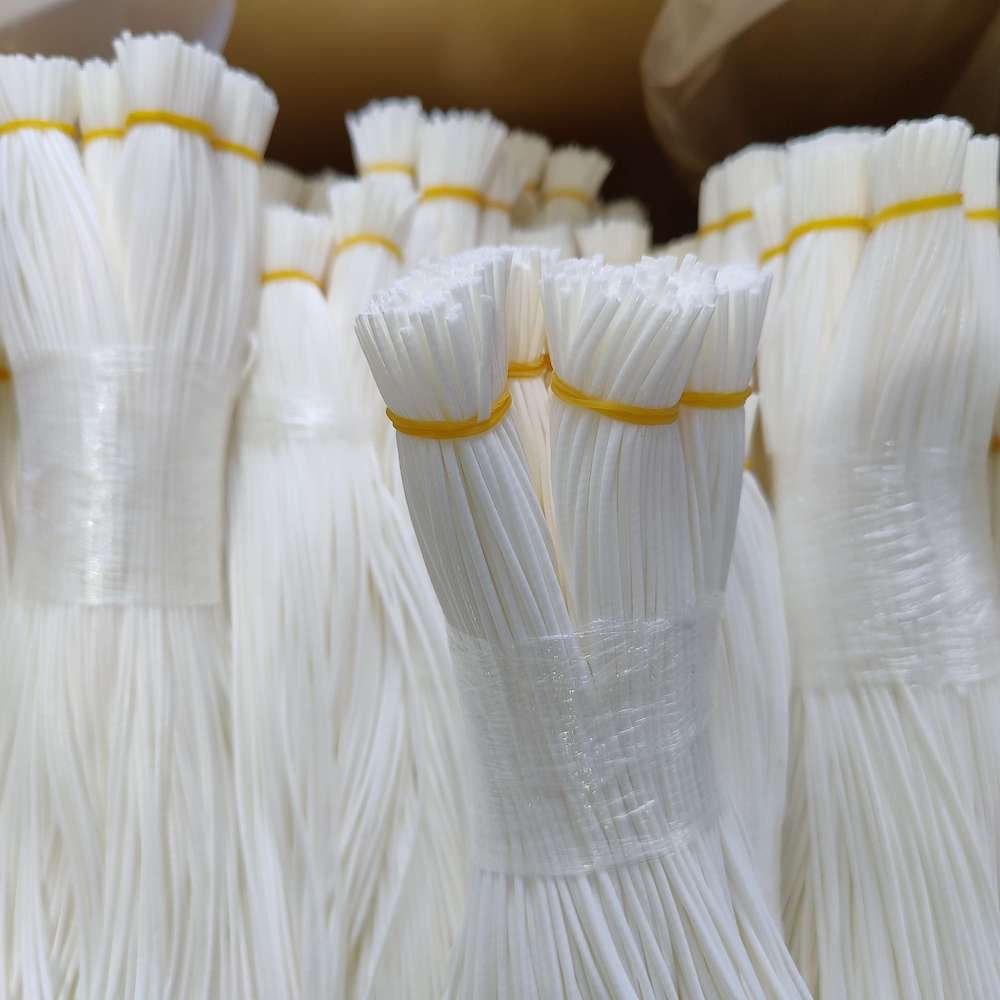
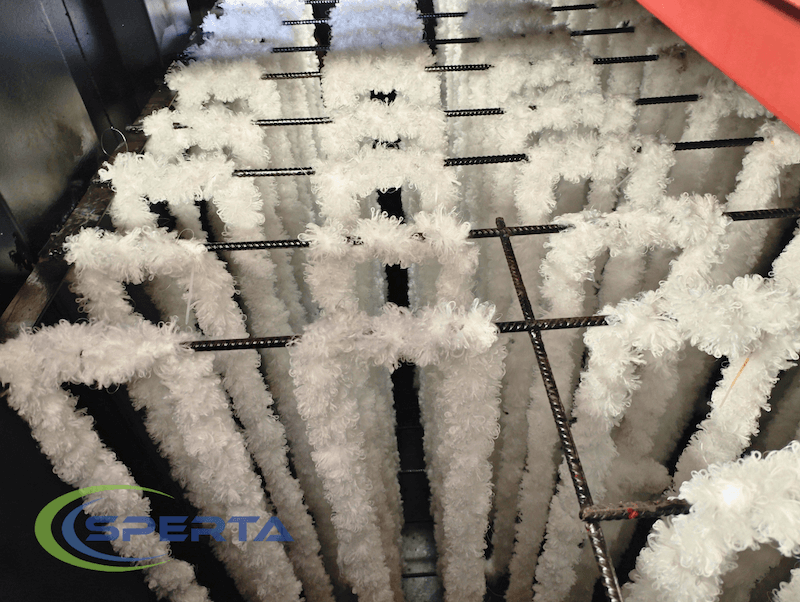
Bio-Cord media uses polymer fibers woven into multi-strand ropes. We install it by either hanging it or mounting it inside biological reactors. Water flow and aeration cause slight movement, which helps microorganisms attach quickly and form stable biofilms. This structure strengthens biological treatment and improves system reliability.
How Does Bio-Cord Media Work in Wastewater Treatment?
Bio-Cord provides a stable and efficient surface for microbial growth.
Microorganisms attach to the fiber surface and gradually form mature biofilms. These microbes continuously break down COD and BOD. Under sufficient dissolved oxygen, nitrifying bacteria convert ammonia efficiently.
As the biofilm thickens, low-oxygen zones form inside the fibers. These zones support denitrification and help remove total nitrogen. Because microbes grow as attached forms, they remain in the system longer. This improves resistance to influent fluctuations and shock loads.
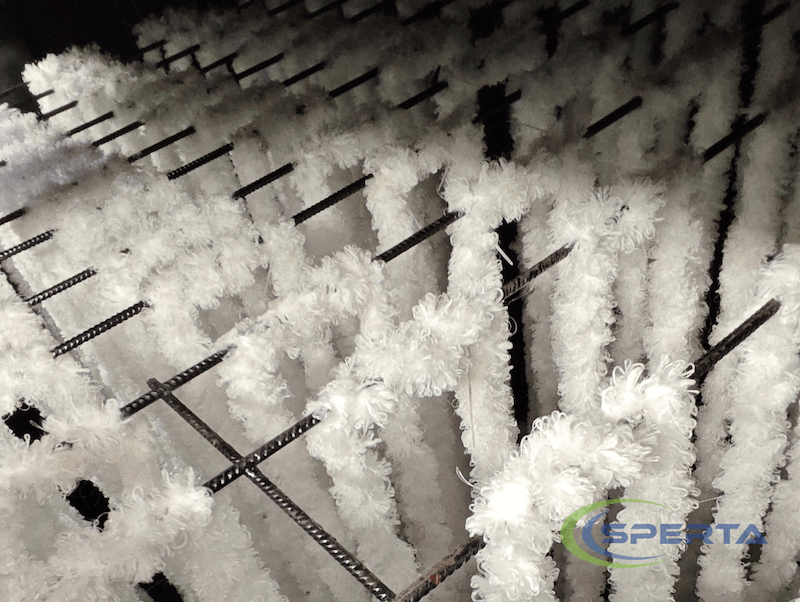
Where Is Bio-Cord Commonly Applied?
Bio-Cord suits projects that require high treatment efficiency and stable operation, especially in the following cases:
Municipal wastewater treatment
- It strengthens existing biological processes and improves system stability.
High-strength industrial wastewater
- Common in the food, beverage, and chemical industries with high organic loads.
Plant upgrades and retrofits
- It improves performance when the tank volume remains limited.
We can integrate Bio-Cord into A/O, A²/O, and MBBR processes as a fixed or semi-fixed biological media.

How SPERTA Uses Bio-Cord to Enhance MBR System Performance?
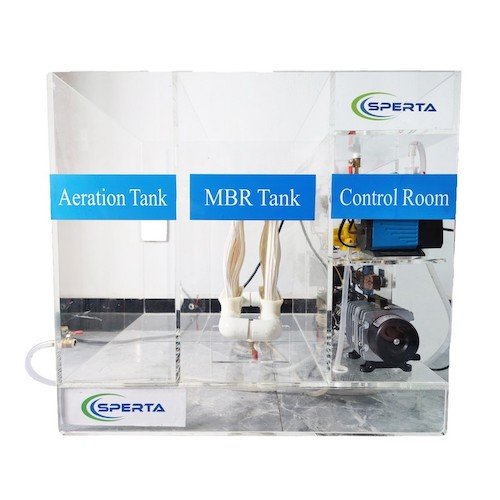
SPERTA typically installs Bio-Cord media in the aerobic tank during the design stage to enhance biological performance, enabling it to work with the downstream MBR membranes as an integrated system. This approach keeps Bio-Cord media and MBR membranes running stably together over long periods.
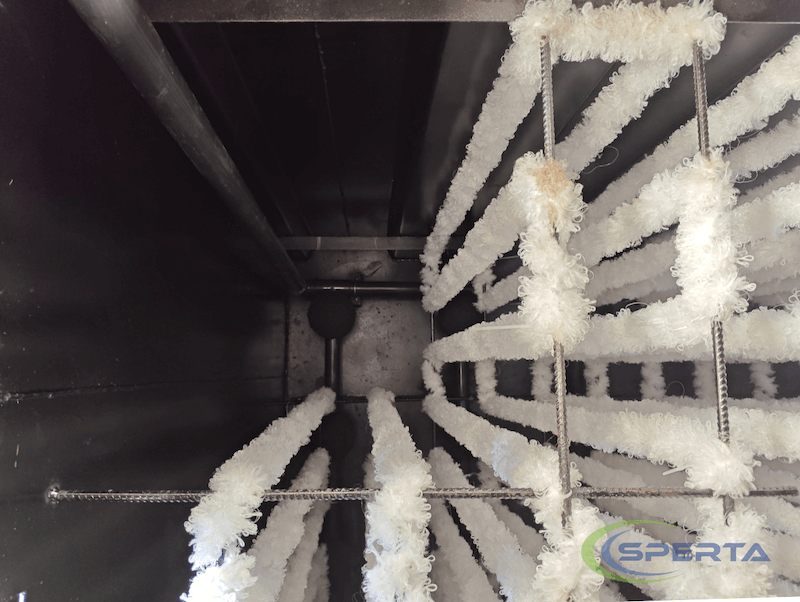
The Bio-Cord media and MBR combination improves organic and ammonia removal and stabilizes influent to the MBR membrane tank. More stable influent reduces fouling risk and slows flux decline. In many municipal and industrial projects, this solution increases capacity and stabilizes effluent quality within a limited space. It also protects membrane performance in high-standard applications.
Conclusion
Bio-Cord media enhances the biological stage by increasing attached biomass, stabilizing reactions, and buffering influent fluctuations. When used ahead of MBR membranes, it helps maintain more consistent water quality entering the membrane tank, effectively reducing fouling pressure and supporting long-term stable operation.
For projects upgrading existing plants, dealing with high organic loads, or operating under limited tank volume, the Bio-Cord + MBR combination offers a practical and efficient solution. Based on project conditions, SPERTA integrates Bio-Cord into the biological process and matches it with suitable MBR membrane modules to achieve reliable performance in both municipal and industrial applications.