Last Updated on July 27, 2026 by Kevin Chen
If you’ve operated an MBR system for a while, you’ve probably seen this happen: TMP keeps rising, membrane flux gradually drops, and sooner or later someone asks the same question:
“Should we perform a CEB now, or is it time for a CIP?”
I’ve been asked this question countless times by plant operators, EPC contractors, and project engineers. Although both CEB and CIP involve chemical cleaning, they serve very different purposes. Understanding when to use each one is key to maintaining stable membrane performance and extending membrane life.
What Are CEB and CIP?
Both CEB and CIP are chemical cleaning methods used in MBR systems, but they target different stages of membrane fouling.
Chemically Enhanced Backwash (CEB)
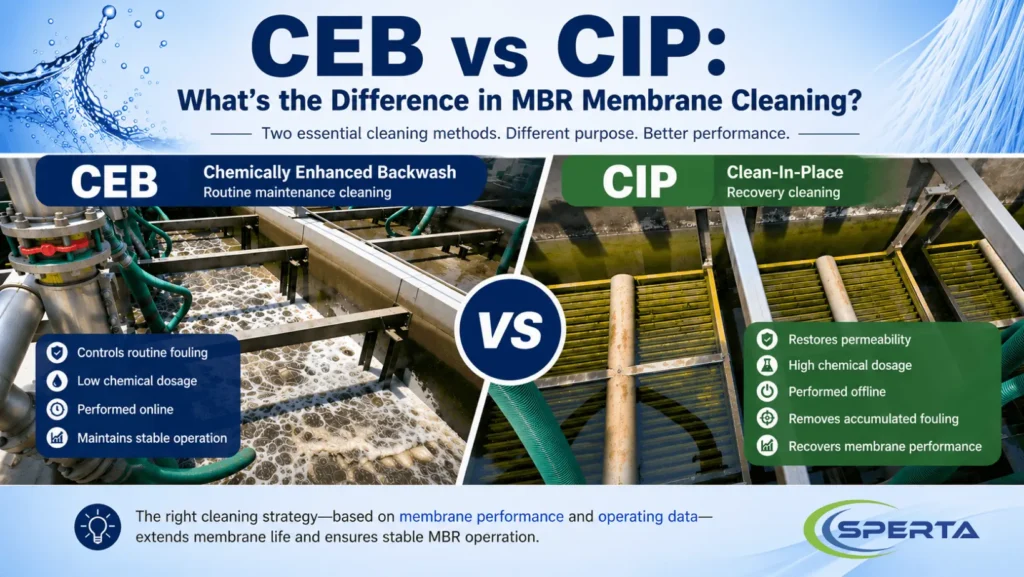
CEB is a routine maintenance cleaning performed during normal operation.
It combines physical backwashing with a low concentration of cleaning chemicals to remove early-stage foulants before they accumulate on the membrane surface.
The primary objective of CEB is to control membrane fouling and maintain stable performance, rather than restore severely fouled membranes.
Clean-In-Place (CIP)
CIP is a recovery cleaning procedure used when routine backwashing and CEB can no longer recover membrane performance.
Unlike CEB, CIP typically requires higher chemical concentrations, longer soaking times, and temporary system shutdown. Its objective is to restore permeability, reduce TMP, and recover membrane flux after significant fouling has developed.
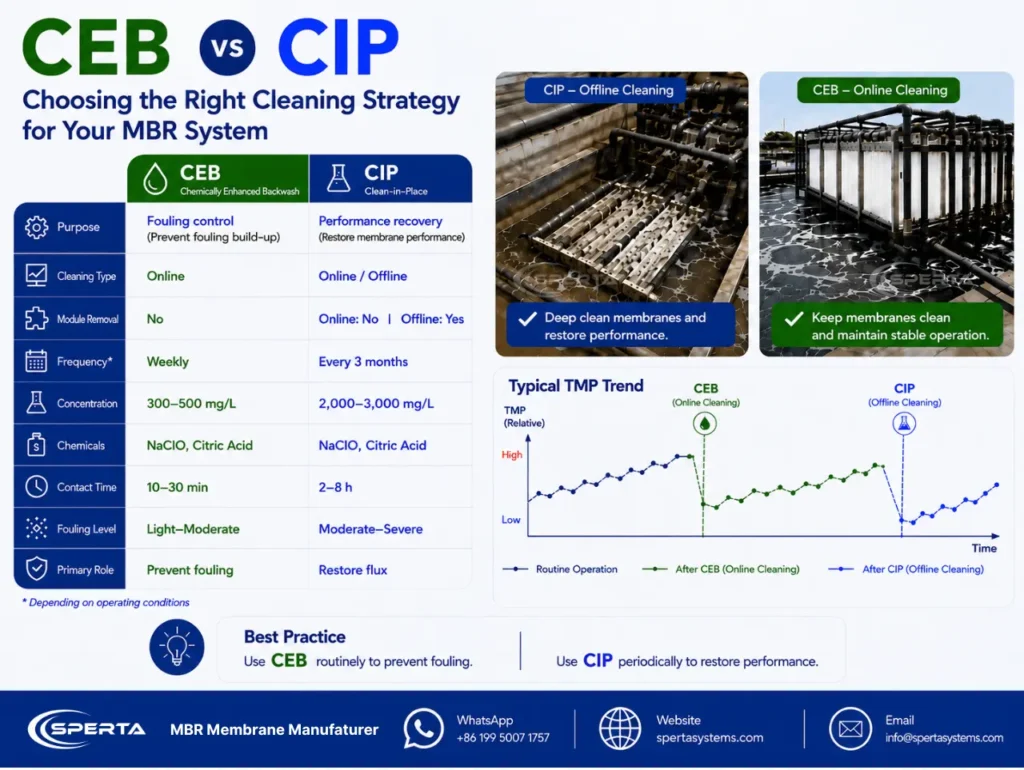
CEB vs CIP: Engineering Comparison
| Cleaning Type | CEB | CIP |
| Purpose | Fouling control (Prevent fouling build-up) | Performance recovery (Restore membrane performance) |
| Cleaning Type | Online | Online / Offline |
| Module Removal | No | Online: No Ofline: Yes |
| Frequency | Weekly | Every 3 months |
| Concentration | 300-500 mg/L | 2,000-3,000 mg/L |
| Chemical | NaClO, Citric Acid | NaClO, Citric Acid |
| Contact Time | 10-30 min | 2-8 h |
| Fouling Level | Light-Moderate | Moderate-Severe |
| Primary Role | Prevent fouling | Restore flux |
Although both procedures use chemical cleaning agents, they differ significantly in purpose, cleaning intensity, operating frequency, and chemical dosage.
CEB focuses on preventive maintenance. By removing newly formed fouling before it becomes difficult to remove, routine CEB slows TMP increase and delays irreversible fouling.
CIP, on the other hand, serves as a restorative cleaning process. Operators perform CIP only after membrane performance has declined to the point where CEB no longer provides sufficient recovery.
Rather than choosing one over the other, engineers should combine both methods as part of a comprehensive membrane maintenance strategy.
SPERTA’s Engineering Experience in MBR Cleaning
SPERTA recommends combining routine CEB with periodic CIP instead of relying on either cleaning method alone. Membrane performance—not the calendar—should determine when to perform CEB or CIP.
In many projects we’ve supported, operators initially follow fixed weekly or monthly cleaning schedules because they are simple to implement. While this approach is convenient, it often leads to unnecessary chemical consumption or delayed recovery cleaning.
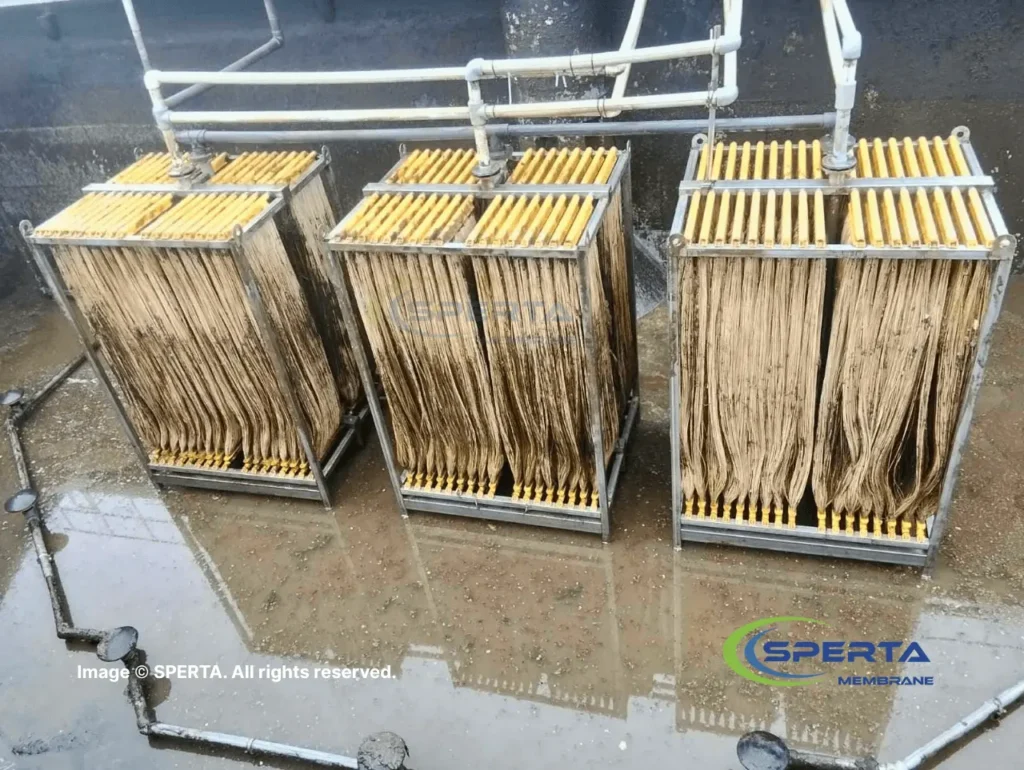
From our experience supporting membrane replacement projects, we’ve found that many systems don’t actually require immediate membrane replacement. In many cases, insufficient routine CEB or delayed CIP allows reversible fouling to gradually develop into severe fouling, making membrane performance much more difficult to recover.
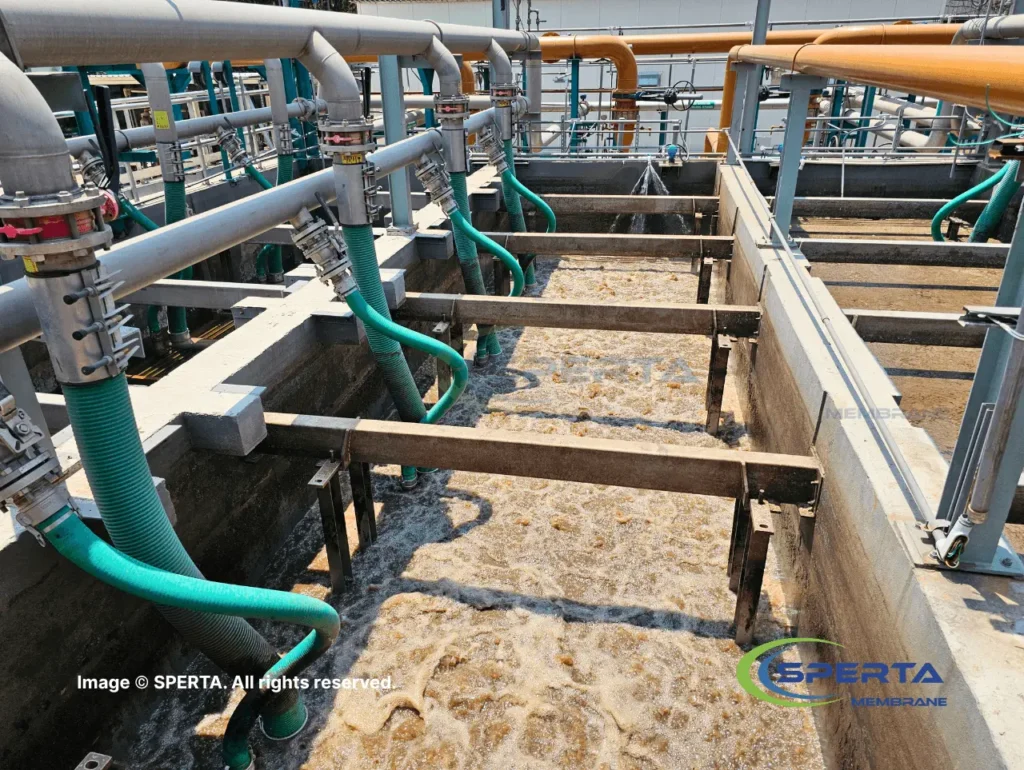
For most municipal wastewater treatment plants, as well as river water, lake water pretreatment, and industrial wastewater with effective upstream pretreatment, SPERTA typically recommends the following maintenance strategy as a starting point:
- Daily physical backwash
- Weekly or biweekly CEB
- Offline CIP every 3–6 months, or when TMP increases by approximately 30–35 kPa from the clean baseline, whichever comes first.
These intervals should be treated as general references rather than fixed rules. The actual cleaning frequency should always be adjusted according to TMP trends, permeability recovery, and overall membrane performance.
Industrial wastewater systems require a more flexible cleaning strategy because wastewater characteristics vary significantly between applications. For example, wastewater with high organic loading may require more frequent alkaline or sodium hypochlorite cleaning, while systems affected by inorganic scaling—such as calcium, iron, or manganese deposits—often require additional acid cleaning.
When developing a membrane cleaning strategy, SPERTA typically evaluates multiple operating parameters, including:
- Influent water quality
- MLSS concentration
- Operating flux
- Water temperature
- TMP trend
- Fouling characteristics (organic vs. inorganic)
Based on our project experience, adjusting cleaning intervals according to actual membrane performance—rather than following a fixed maintenance schedule—helps reduce chemical consumption, minimize unnecessary downtime, delay irreversible fouling, and extend membrane service life.
Conclusion
CEB and CIP play different but equally important roles in MBR membrane maintenance.
CEB controls routine fouling and slows membrane performance decline, while CIP restores permeability after severe fouling has developed.
A well-planned cleaning strategy that combines physical backwashing, routine CEB, and periodic CIP helps maintain stable membrane performance, reduce operating costs, and extend membrane lifespan.
If you are developing a maintenance program for a new MBR system or optimizing an existing plant, SPERTA can help evaluate your operating conditions and recommend an appropriate CEB and CIP cleaning strategy.