Last Updated on October 27, 2025 by Kevin Chen
In the MBR (Membrane Bioreactor) module, the O-ring may seem like a small accessory, but it plays a very important role in maintaining long-term system stability. Different O-ring materials may perform differently in temperature resistance, chemical stability, and aging resistance. Choosing the right O-ring not only prevents leakage but also extends the membrane module’s lifespan and ensures reliable system operation.
What is the Function of O-rings in MBR Membrane Modules?
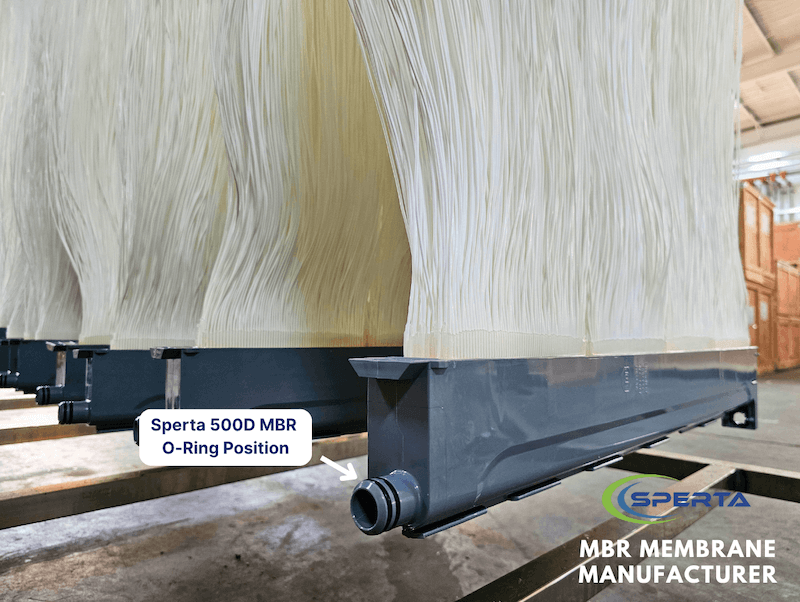
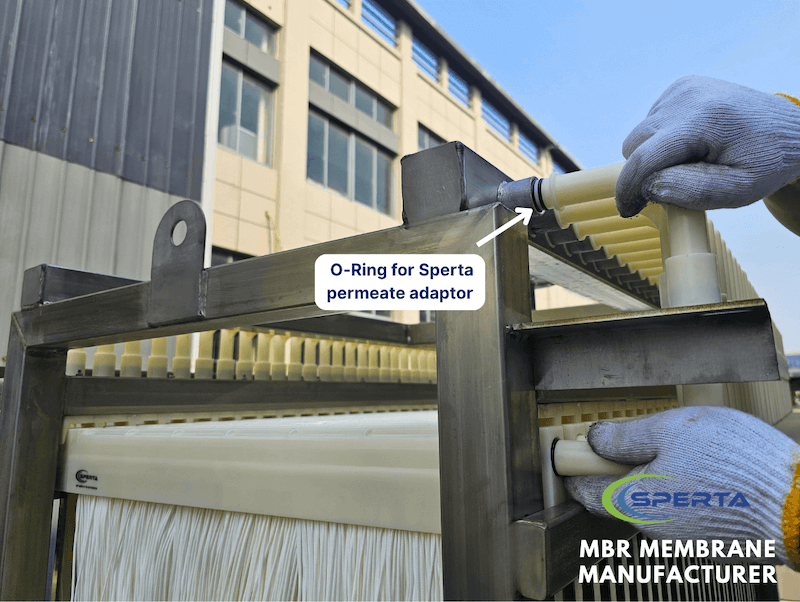
O-rings are primarily used to seal the upper and lower caps of the membrane module, preventing air–water mixing and liquid leakage during operation. They are typically installed in grooves and rely on elastic deformation to form a tight seal. During long-term operation, O-rings are exposed to pressure, temperature fluctuations, and chemical cleaning, so the material must have excellent elastic recovery and chemical resistance.
If the O-ring becomes brittle, deformed, or chemically degraded, it can cause:
- Air leakage, affecting aeration distribution.
- Liquid leakage, leading to TMP fluctuation and unstable flux.
- Premature sealing failure, increasing maintenance frequency.
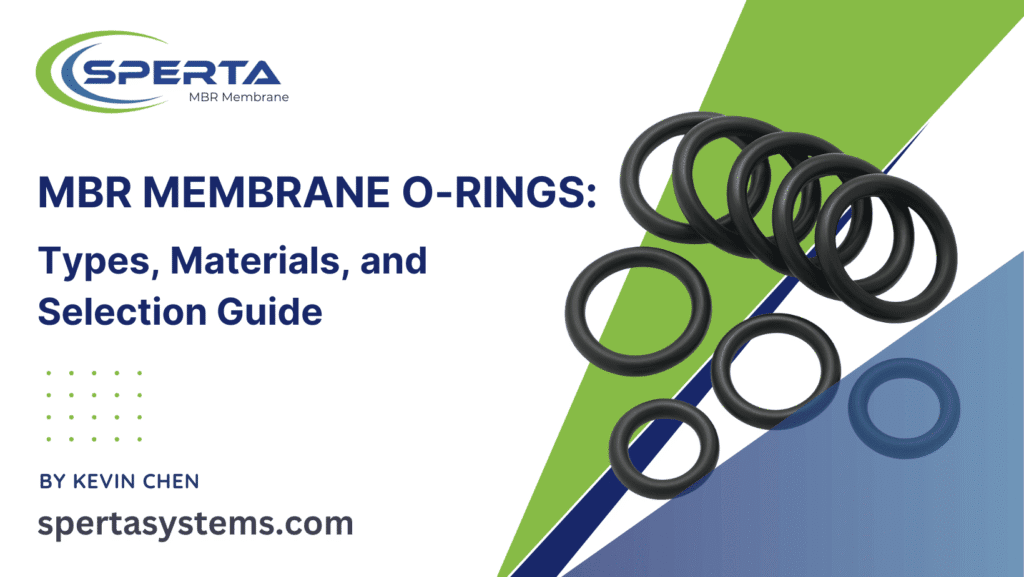
Common Types and Materials of MBR Membrane O-rings
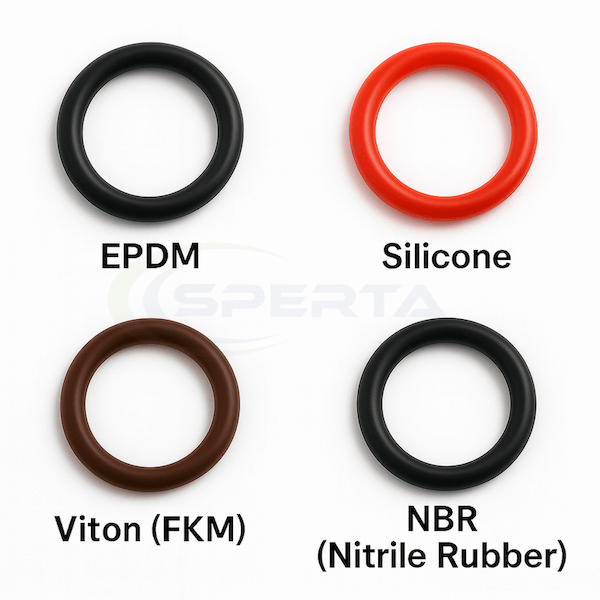
The most common materials used for O-rings in MBR membrane modules include EPDM, Silicone, Viton (FKM), and NBR.
Each has different strengths in chemical resistance, temperature tolerance, and aging resistance.
| Material | Characteristics | Chemical Resistance | Temperature Range | Typical Applications |
| EPDM (Ethylene Propylene Diene Monomer) | Excellent elasticity, aging and ozone resistance | Excellent resistance to alkalis, moderate to acids | -40°C to 120°C | Municipal wastewater |
| Silicone | Soft, flexible, and suitable for high-temperature operation | Moderate | -50°C to 200°C | Food, pharmaceutical, or high-temperature wastewater |
| Viton (FKM) | Excellent resistance to strong acids, oxidants, and high temperatures | Excellent | -20°C to 250°C | Industrial wastewater, frequent chemical cleaning systems |
| NBR (Nitrile Rubber) | Good oil resistance but low aging resistance | Moderate | -30°C to 110°C | Oily wastewater |
💡 Tip: In high-oxidation or frequent chemical cleaning environments, avoid using EPDM or NBR O-rings as they tend to age faster.
👉 Learn more about SPERTA MBR membrane modules.
How to Select the Right O-ring Material for your MBR System
When designing or maintaining an MBR system, choosing the correct O-ring material depends on several key factors:
- Chemical cleaning conditions
- For systems that frequently use oxidants such as NaOCl or H₂O₂, choose Viton (FKM) for its strong resistance.
- For systems with mild chemical cleaning (mainly alkaline), EPDM is sufficient.
- Operating temperature and environment
- For high-temperature operation (>100°C), Silicone or Viton is recommended.
- For typical municipal wastewater (<40°C), EPDM is cost-effective and reliable.
- Cost and maintenance cycle
- For long-term stability and low maintenance, Viton is the best option despite its higher cost.
- For balanced performance and affordability, EPDM remains the most widely used choice.
SPERTA’s Experience in O-ring Selection and Testing
At SPERTA, O-ring material selection and testing are key parts of membrane module production.
Each batch of O-rings undergoes a series of strict tests to ensure long-term sealing reliability, including:
- Air-tightness testing – to ensure no leakage under operating pressure;
- Chemical resistance testing – long-term soaking in NaOCl and H₂O₂ solutions;
- Compression set testing – simulating long-term pressure to verify elasticity retention;
- Material compatibility testing – confirming proper fit with module housing materials (UPVC, ABS, etc.).
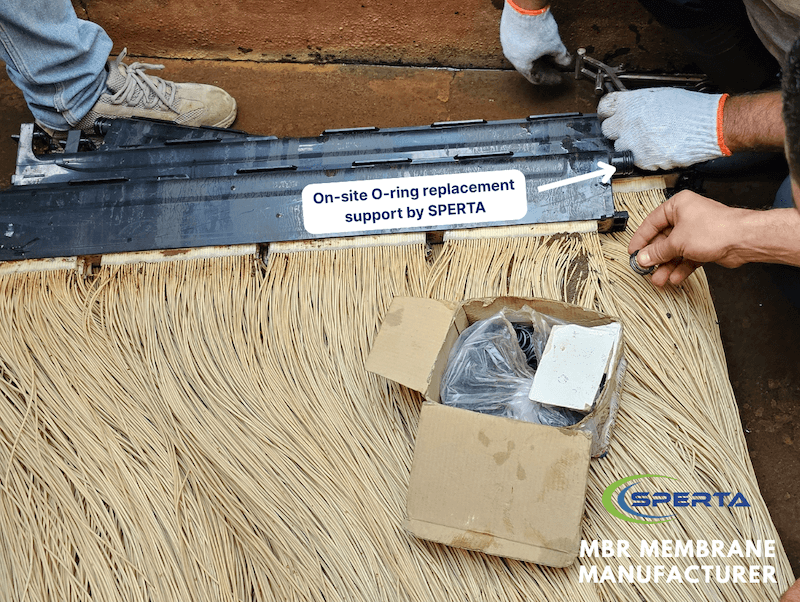
Over years of field operation, SPERTA MBR membrane modules have proven excellent O-ring durability and stability in both municipal and industrial projects.
Conclusion
The above information provides a complete guide to MBR membrane O-ring types, materials, and selection. Although small in size, O-rings play a major role in ensuring sealing performance and long-term membrane reliability. Selecting the proper material based on cleaning frequency, temperature, and chemical conditions can greatly improve system performance and reduce maintenance costs.
If you have any questions about O-ring selection or MBR membrane module design, don’t hesitate to contact SPERTA. Shanghai SPERTA Environmental Technology Co., Ltd. has been dedicated to water treatment technology and membrane manufacturing for many years.
SPERTA MBR membranes are recognized globally for their reliable performance, precise engineering, and long service life. If you have any project questions or technical needs, please don’t hesitate to contact us.